
Roland PRO-E Mods: Rosetta OS with Juno mode, arpeggiator and custom samples
Custom firmware for the Roland PRO-E (Pro-E) Intelligent Arranger, the 1989 Italian arranger with an MT-32 voice board inside. A Juno mode with real PWM, an arpeggiator, a resonant filter and a moving Juno chorus on its reverb chip, your own long samples, and new styles from your MIDI files. Free, open source, tested on a real PRO-E.
Listen
What the mod adds
Every feature above is confirmed on hardware. The effects were measured on a real PRO-E through an audio interface.
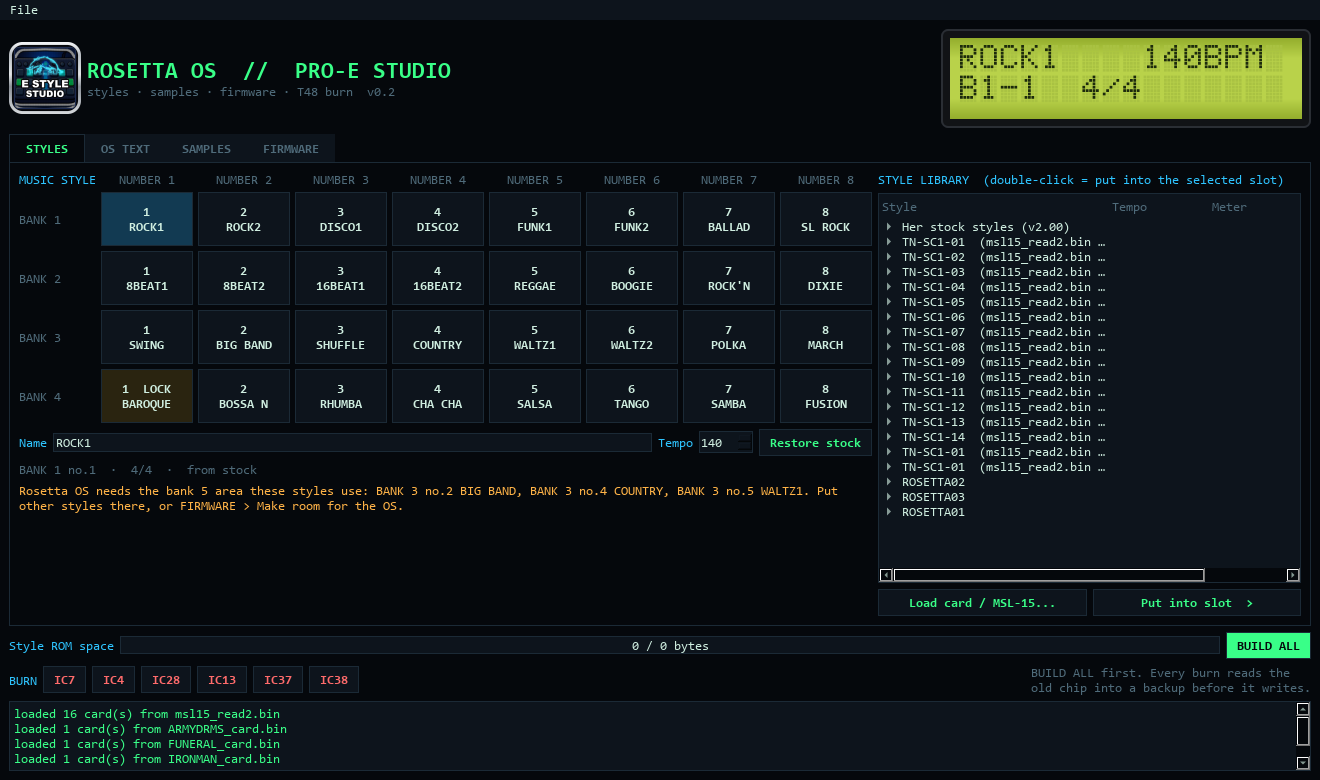
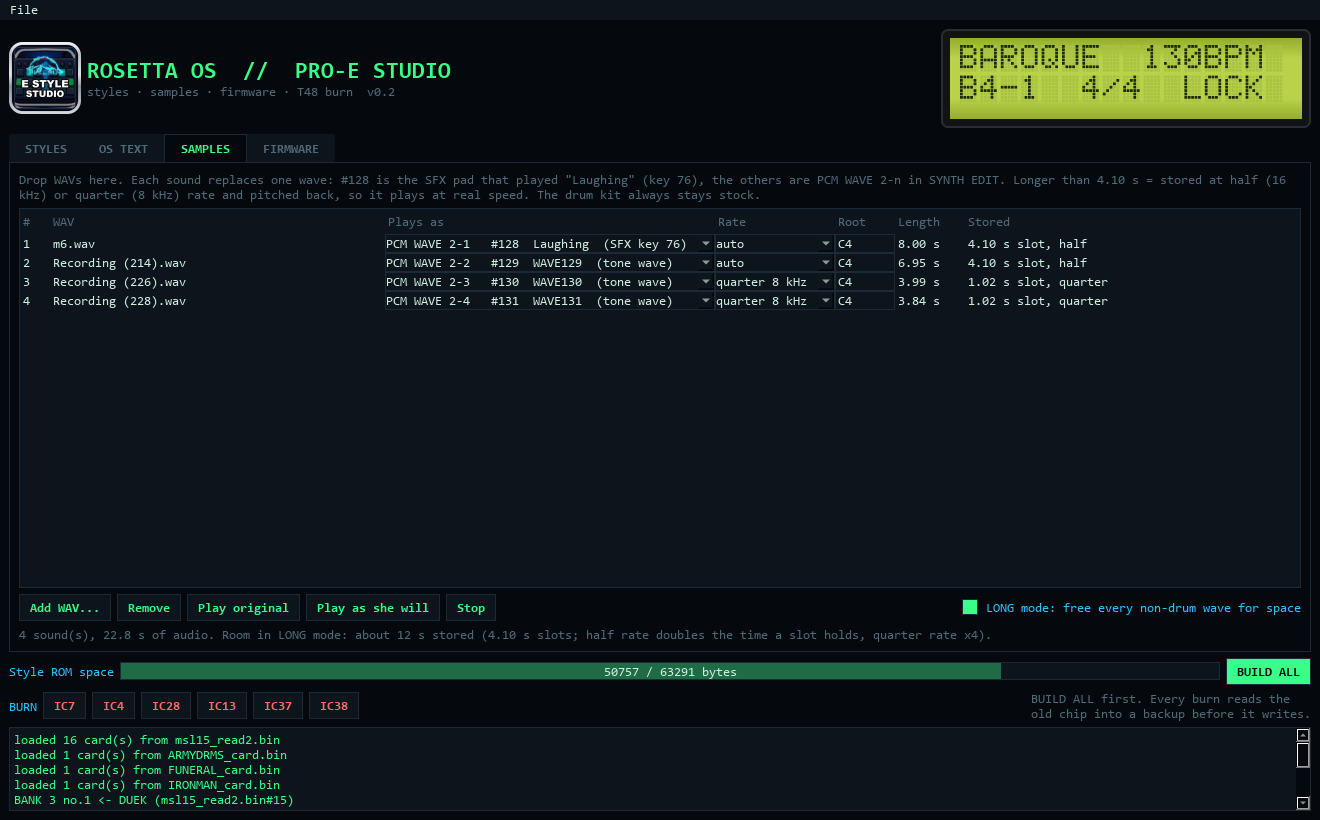
How it works
- Read your own chips on a programmer such as a T48 (IC7 style ROM, IC4 OS, and for the synth side IC28 and IC13 on the voice board). Keep the originals.
- Open PRO-E Studio (
romstudio/run_romstudio.bat). It patches your dumps and checks every change before writing the burn files. - Burn W27C040 / W27C512 chips and fit them, notch the right way. Put the originals back and she's a stock PRO-E again.
Styles and OS text need only IC7 and IC4, no board mods. SYNTH EDIT and Juno mode need the one-wire pin-31 mod. The new effects need IC13 and IC28 on the voice board. Custom samples need IC37 and IC38 (plus IC28 for the wave table).
Why it sounds like this
The PRO-E's voice board is Roland MT-32 / CM-32L hardware: the same LA synth chip as the D-50, and a Boss reverb DSP. LA tones were always "a sampled attack over a plain synth body". Juno mode gives that body what the chip could always do but no front panel offered. The chorus works by having the voice CPU step the reverb chip through 128 delay positions, in an order where each step changes one control byte only.
Community
Questions, hardware reports and ideas: join the Discord. More Rosetta mods: D-110, SP-808, Akai S2000, GP-16, U-110.